
how to qualify for autism services Medicaid Florida
Short answer
To qualify for autism services under Medicaid in Florida, your child must have an autism or developmental disability diagnosis, meet income and resource limits, and be at least 3 years old. You apply through the APD Waiver or Early Steps if under 3. Diagnosis requires diagnostic testing like ADOS-2 or CARS-2, plus supporting documentation such as school records. Apply early, even with incomplete paperwork, because waitlists are long and approval takes months.

Cut Through the Bureaucracy: Why the Official Process Fails Families (and How This Roadmap Fixes It)#
You are searching at night. Your child was just diagnosed with autism. You know ABA therapy helps, but the cost is crushing you. You call your pediatrician, who says "call Medicaid." You call Medicaid, who says "apply for the APD Waiver." You apply. Then you wait. And wait. The waitlist is long. Your child is getting older. Nobody explains what happens next or why it takes so long.
Families across Miami-Dade, the Keys, and Homestead experience this every week. The official process works, but it is slow and confusing. This guide cuts through that confusion. It walks you through each real step: what to gather, when to apply, what "prior authorization" actually means, and how to keep your coverage going once you have it. You will know exactly what to expect and what to do this week.
Qualify for Medicaid Autism Services in Florida: The Complete Eligibility & Application Path#
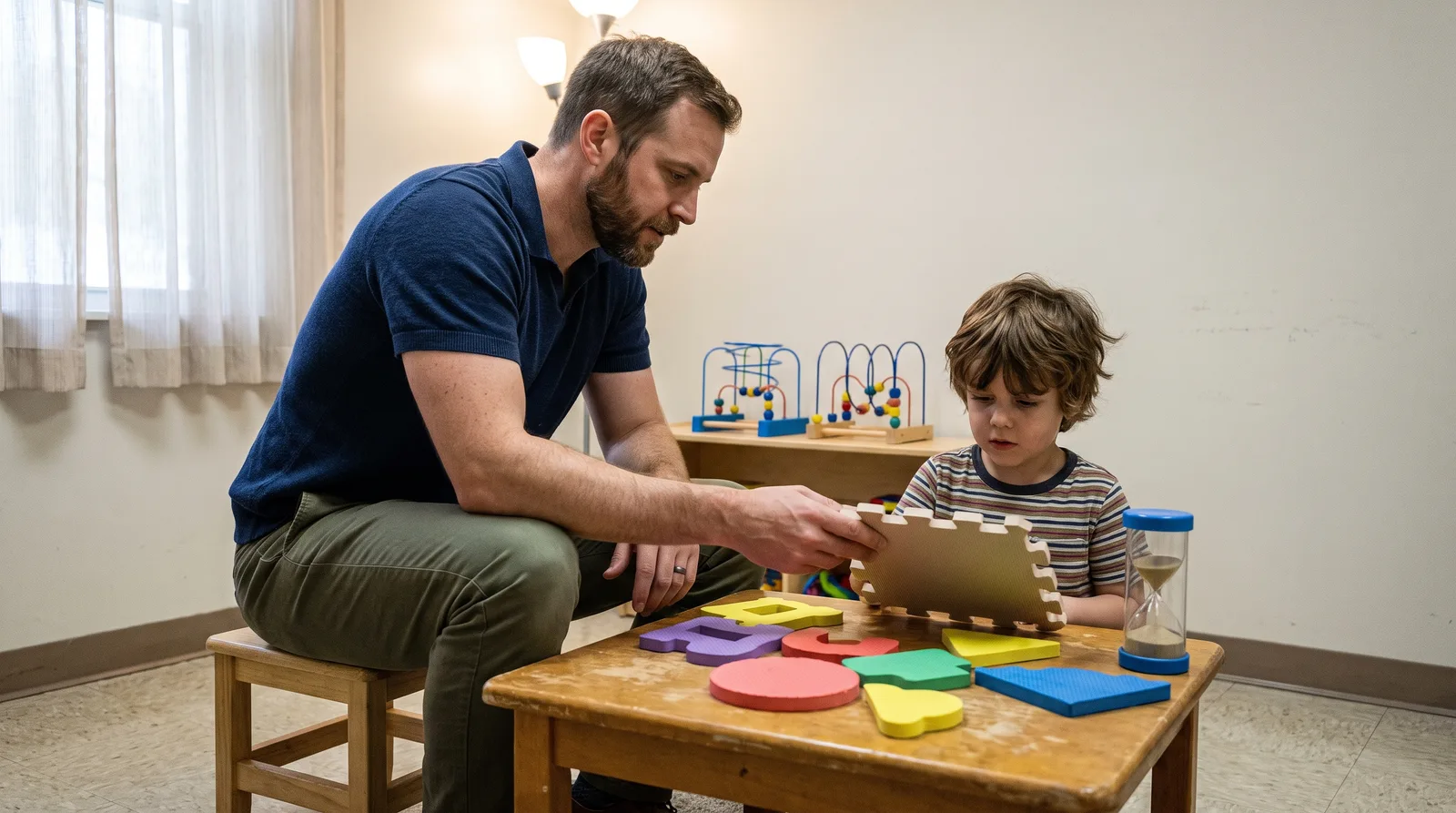
Your child can get Medicaid-covered autism services in Florida if three things are true: your family's income and resources fall within Medicaid limits; your child has a diagnosis of autism or developmental disability, and your child is at least 3 years old. If your child is younger than 3, the Early Steps program covers developmental services. Once your child is 3 or older, you apply for the APD Waiver (Autism and Other Developmental Disabilities Waiver), which pays for ABA therapy and other behavioral services.
The path is not automatic. Medicaid does not hand out approvals. You apply, you wait for a determination, and then, if approved, you request prior authorization for each service before therapy starts. Many families do not know this and are shocked when they are approved for Medicaid but told their ABA provider needs written permission from the insurance company before the first session.
Income and Resource Limits for Medicaid Qualification#
Medicaid in Florida has income and resource caps. If your family earns above the limit or holds assets above the threshold, you do not qualify, unless your child qualifies under a special category like former foster care or presumptive eligibility.
The exact limits change each year. Your best move is to call the Florida Department of Children and Families (DCF) or visit their website to confirm the current numbers for your household size. Do not guess. Many families think they are over the limit and do not apply, only to find out later they qualified. Others apply and are denied because they miscalculated.
If your income is slightly above the limit, ask about spend-down programs. In some cases, you can set aside medical expenses (like therapy costs) to bring your countable income down. This is not automatic, you have to ask and provide proof of the expenses.
Diagnostic Requirements and Proof of Autism Diagnosis#
Medicaid and the APD Waiver require proof of autism or a related developmental disability. You cannot just say your child has autism. You need documentation.
The documentation must include one or more of both diagnostic testing and collateral documentation. Diagnostic testing means a formal assessment like the ADOS-2, GARS-3, CARS-2, ASRS, or ADI-R. Collateral documentation means school records, medical or therapy notes, psychological testing, or adaptive behavior assessments.
If your child was diagnosed by a pediatrician or school psychologist, gather those records. If you have therapy progress notes from speech therapy or occupational therapy, those count. If your child has an IEP (Individualized Education Plan) from school, that is collateral documentation. Bring all of it.
Do not wait for a "perfect" diagnosis. If your child has been evaluated and you have the paperwork, apply now. Incomplete files are common. Medicaid will ask for more if they need it. Waiting for additional evaluation delays your child's access to therapy.
APD Waiver Eligibility Criteria and Application Timeline#
The APD Waiver is the main path to Medicaid-covered ABA therapy for children 3 and older. To qualify, your child must have a diagnosis of autism or another developmental disability, meet income limits, and be a Florida resident.
The APD Waiver has a waitlist. In some regions it is shorter; in others it can be years long. This is the hard truth: even if you are approved, you may wait before services start. Apply now, even if you are not ready to start therapy immediately. The sooner you are on the list, the sooner your child moves toward the top.
When you apply, you will need:
- Proof of residency (lease, utility bill, or mortgage)
- Income verification (pay stubs, tax returns, or benefit statements)
- Proof of diagnosis (medical records, school evaluation, or psychological report)
- Social Security number for your child and parents
The application takes a few weeks to process. You will get a notice saying you are approved, denied, or need more information. If approved, you are on the waiver. You can then request services.
Readiness Assessment: When to Apply and Red Flags You're Delaying#
Apply for Medicaid and the APD Waiver as soon as your child has a diagnosis. Do not wait for a "complete" file or a second opinion. Do not wait until you are ready to start therapy. Apply now.
The biggest red flag is delay. Families often think, "We will apply when we have everything together" or "We will apply next month." Next month becomes next year. Your child is older. The waitlist is longer. You have lost time you cannot get back.
Another red flag is applying only for Medicaid without also applying for the APD Waiver. Some families get Medicaid approval and think they are done. Medicaid alone does not cover ABA therapy. You need the APD Waiver for behavioral services. Apply for both.
A third red flag is not following up. If you do not hear back in a few weeks, call DCF. If you are denied, ask why. If you are told you need more information, get it and resubmit. Silence is not approval. You have to push.
Navigate Authorization, Coverage, and Provider Networks: From Approval to Therapy#
Once you are approved for Medicaid or the APD Waiver, the next step is prior authorization. This is where many families get stuck. They think approval means therapy can start. Your ABA provider has to get written permission from Medicaid before the first session.
Prior Authorization Process for Behavioral Analysis Services#
Prior authorization is Medicaid's way of saying, "Yes; we will pay for this service, but only if the provider asks us first and we say it is medically necessary."
Here is how it works. You choose an ABA provider. The provider submits a prior authorization request to Medicaid. The request includes your child's diagnosis, the recommended therapy hours per week, and the clinical reason for that amount. Medicaid reviews it and says yes or no, usually within a couple of weeks.
If Medicaid says yes, the provider gets a letter saying therapy is approved for a certain number of hours per week for a certain time period. Therapy can then start.
If Medicaid says no or asks for more information, the provider has to resubmit or appeal. This can add weeks to the timeline.
The key move: choose your ABA provider before you need prior authorization. Ask the provider if they have submitted prior authorization requests to Medicaid before. Ask how long it usually takes. Ask if they will handle the paperwork or if you have to. Some providers are fast and experienced. Others are slow. You want a fast one.
Medicaid vs. KidCare Coverage Differences for ABA Therapy#
Florida has two programs for children: Medicaid and KidCare. Both can cover ABA therapy, but they work differently.
Medicaid is for low-income families. If you qualify for Medicaid, your child is covered. There is no premium. You may have a small copay per visit, but it is usually low or zero.
KidCare is for families who earn too much for Medicaid but not enough to afford private insurance. KidCare has a monthly premium and a small copay per visit. KidCare covers ABA therapy, but the approval process and coverage rules are slightly different from Medicaid.
The big difference: Medicaid covers more services and has fewer restrictions. KidCare has tighter limits on therapy hours and may require more frequent reauthorization. If you qualify for Medicaid, choose it over KidCare. If you do not qualify for Medicaid but do for KidCare, take KidCare, it is better than nothing.
Ask your ABA provider which program they prefer to work with. Some providers are more experienced with Medicaid; others know KidCare better. A provider who knows your program well will get authorization faster.
ABA Provider Networks and Insurance Acceptance Across Florida Regions#
Not every ABA provider accepts Medicaid or KidCare. Some accept only private insurance. Some accept Medicaid but have a long waitlist. Some are in-network with your plan; others are out-of-network.
In-network means the provider has a contract with Medicaid or KidCare. They bill the insurance directly. Your out-of-pocket cost is lower.
Out-of-network means the provider does not have a contract. This gets expensive fast.
Before you commit to a provider, ask three questions:
- Do you accept Medicaid (or KidCare)?
- Are you in-network or out-of-network?
- How long is your waitlist?
In Miami-Dade, Homestead, Kendall, Hialeah, and the Keys, there are many ABA providers. Some are large agencies; some are small practices. Larger agencies often have more experience with insurance and faster authorization. Smaller practices may offer more personalized care but slower paperwork.
Permuy Diversity Intervention, licensed in Florida (license MH-15621) and in business since 2019, serves families across Miami-Dade County, Monroe County, the Florida Keys, Homestead, Kendall, Hialeah, Key West, and Marathon. We work with Medicaid and understand the authorization process. When you call, ask if we have availability and what our current waitlist looks like.
Reauthorization Cycles and Maintaining Coverage Continuity#
Medicaid approval is not forever. It expires. Usually, it lasts for an extended period. Before it expires, your ABA provider has to request reauthorization, a new prior authorization for the next approval cycle.
Families lose coverage when the provider forgets to reauthorize, or they reauthorize late. Your child's therapy is interrupted. You have to start the process again.
Do not let this happen. Mark your calendar. Before your authorization expires, call your ABA provider and ask: "When does my child's authorization expire?" If they do not know; that is a red flag. Ask them to submit the reauthorization request well in advance.
Some providers are good at this. They track expiration dates and reauthorize automatically. Others are not. If your provider is slow, you may have to push them. It is your child's therapy on the line. Push.
When Medicaid reauthorizes, they may approve the same hours as before, or they may ask for an updated clinical report. If your child has made progress, the report should show that. If your child needs more hours, the report should explain why. A good ABA provider will write a strong report that supports continued or increased therapy.
Close the Funding Gaps: Cost Strategies, Transitions, and Language Access#

Medicaid covers a lot, but it does not cover everything. There are gaps. Families have to figure out how to fill them.
Funding Gaps and Out-of-Pocket Cost Strategies for Qualified Families#
Medicaid covers ABA therapy, but it may not cover all the hours your child needs. It may not cover parent training, consultation, or other services. It may not cover travel time if the provider comes to your home. It may not cover the initial evaluation.
The gaps vary. Some families have small gaps. Others have large ones. The cost depends on your provider's rates, your child's needs, and what Medicaid approves.
If you have a gap, here are real moves:
Ask your provider about sliding scale fees. Some providers charge less for families who cannot afford full price. It never hurts to ask.
Look for grants or nonprofits. Autism organizations in Florida sometimes have funds for therapy. Call Autism Florida or your local autism chapter and ask what is available.
Negotiate with your provider. If Medicaid approves a certain number of hours per week but your child needs more, ask the provider if you can pay out-of-pocket for the additional hours at a reduced rate. Some will work with you.
Use a Health Savings Account (HSA) or Flexible Spending Account (FSA) if you have one. ABA therapy is a qualified medical expense. You can use pre-tax money to pay for it.
Ask about group therapy or parent-coaching models. Individual therapy is expensive. Some providers offer group sessions or teach parents to do therapy at home, which costs less.
The hard truth: if you have a gap and cannot fill it, your child may not get all the therapy they need. This is why applying early and getting on the waitlist matters. The sooner you are approved, the sooner you can start, even if it is fewer hours than ideal. Some therapy is better than none.
Transition Planning Between Early Steps and School-Age Medicaid Services#
If your child is under 3, they are in Early Steps, Florida's early intervention program. Early Steps is free or low-cost. It covers speech, occupational therapy, and developmental services.
When your child turns 3, Early Steps ends. School-age Medicaid services begin. This is a big transition. Many families do not know it is coming and are caught off guard.
Here is what to do: before your child turns 3, call your Early Steps coordinator and ask about transition planning. They will help you apply for school-age services (Medicaid or the APD Waiver). They will share your child's records with the school district. They will make sure there is no gap in services.
Do not assume the school will provide ABA therapy. Schools provide special education and related services, but ABA therapy is often not included. If you want ABA therapy after age 3, you have to get it through Medicaid or the APD Waiver, not the school.
The transition is a good time to update your child's diagnosis and get new testing if needed. Medicaid will want current documentation. If your child was tested at an earlier age, Medicaid may ask for updated testing. Plan for this.
Resources for Spanish-Speaking Families and Multilingual Support#
If you speak Spanish, you have a right to language access. Medicaid has to provide interpreters and translated documents. The school has to provide interpreters. Your ABA provider should too.
Do not accept a situation where you do not understand what is happening. If your provider does not speak Spanish, ask for an interpreter. If Medicaid sends you a letter in English and you do not read English, call and ask for a Spanish version. These are your rights.
Permuy Diversity Intervention offers services in English and Spanish. Our team includes bilingual clinicians who understand the needs of Hispanic families in Miami-Dade, Homestead, Kendall, Hialeah, and the Keys. We can explain Medicaid, the APD Waiver, and your child's therapy plan in Spanish. We can also help you navigate the system and advocate for your child.
If your provider does not offer Spanish services, ask for a referral to one that does. Do not settle for less. Your child deserves care in a language you understand.
Your Next Move This Week#
You now know how to qualify for Medicaid autism services in Florida. You know the APD Waiver, the diagnostic requirements, the prior authorization process, and the cost strategies. You know the difference between Medicaid and KidCare. You know when to apply and what to expect.
The last step is action. This week, do one of these:
Call the Florida Department of Children and Families (DCF). Ask about Medicaid and APD Waiver eligibility for your child. Get the current income limits. Ask about the waitlist in your region.
Gather your child's diagnosis documents. Find the evaluation report, school records, therapy notes, or medical records. Put them in one folder. You will need them for the application.
Call an ABA provider in your area. Ask if they accept Medicaid. Ask about their waitlist. Ask about their experience with prior authorization. If they are slow or unhelpful, call another one.
If you speak Spanish and your provider does not, ask for a bilingual provider. You have a right to understand your child's care. Do not accept less.
The waitlist is long. The process is slow. But it works. Thousands of families in Florida have gotten Medicaid-covered ABA therapy for their children. You can too. Start this week.
If you want a team that understands Medicaid, the APD Waiver, and your family's needs, in English or Spanish, talk to a bilingual ABA team who gets it. Medicaid-approved ABA therapy and counseling for your child across the Florida Keys and Miami-Dade. Book a free consultation.
| Requirement | Specification |
|---|---|
| Minimum Age | At least 3 years old |
| Diagnosis | Autism or developmental disability (documented) |
| Proof of Diagnosis | Diagnostic test (ADOS-2, GARS-3, CARS-2, ASRS, or ADI-R) AND collateral documentation |
| Residency | Florida resident |
| Income/Resources | Must meet Medicaid limits (confirm current limits with DCF) |
| IQ Threshold (if ID applies) | Full Scale IQ of 70 or below |
| Documentation Category | Examples |
|---|---|
| Formal Diagnostic Testing | ADOS-2, GARS-3, CARS-2, ASRS, ADI-R |
| School Records | IEP, school evaluations, teacher reports |
| Medical/Therapy Documentation | Pediatrician records, speech therapy notes, OT progress notes |
| Psychological/Educational Testing | Psychological reports, adaptive behavior assessments, educational evaluations |
| Step | Documentation Needed | Timeline |
|---|---|---|
| Initial Application | Proof of residency, income verification, diagnosis proof, SSNs | Submit when ready |
| Processing | May request additional information if file incomplete | Few weeks |
| Determination Notice | Approved, denied, or more info requested | Few weeks from submission |
| Placement on Waiver | Approved applicants placed on waitlist | Varies by region (can be months to years) |
| Request Services | Prior authorization required before each service begins | After approved |
Florida Medicaid & KidCare Income Eligibility Checker for Autism Services
Estimates Florida Medicaid and Florida KidCare (CHIP) eligibility thresholds for children with autism based on family size and household income, referencing official 2024 HHS Federal Poverty Guidelines and Florida DCF MAGI standards.
100% Federal Poverty Level (FPL):
Medicaid Income Cap (133% FPL + 5% Disregard):
Florida KidCare Subsidized Cap (210% FPL + 5% Disregard):
Eligibility Status (1=Medicaid Likely, 2=KidCare Likely, 3=Over Subsidized Limits):
Frequently Asked Questions
What happens after I'm approved for the APD Waiver?
Approval places your child on the waiver waitlist, which varies in length by region. Once your child reaches the top of the list, you can request prior authorization for specific services. Prior authorization is written permission from the insurance company required before your ABA provider can begin therapy sessions, this is a separate step from approval.
Can my child receive autism services under Medicaid if they're under 3 years old?
No, APD Waiver services require children to be at least 3 years old. Children under 3 with developmental delays are eligible for the Early Steps program, which provides developmental services during infancy and early childhood.
What documentation do I need to prove my child's autism diagnosis for APD eligibility?
You must provide one or more diagnostic tests (ADOS-2, GARS-3, CARS-2, ASRS, or ADI-R) AND collateral documentation. Collateral evidence includes school records, IEPs, medical or therapy notes from pediatricians or therapists, psychological evaluations, or adaptive behavior assessments. Do not delay applying waiting for a 'perfect' file, submit what you have and provide additional records if Medicaid requests them.
What if my family's income is above the Medicaid limit?
Ask DCF about spend-down programs, which allow you to set aside documented medical expenses (such as therapy costs) to reduce your countable income below the limit. This option is not automatic, you must request it and provide proof of eligible expenses. For exact current income thresholds, contact the Florida Department of Children and Families directly, as limits change annually.
Why do I need to apply for both Medicaid and the APD Waiver separately?
Medicaid is the insurance program, but it does not automatically cover behavioral health services like ABA therapy. The APD Waiver specifically authorizes behavioral services for individuals with developmental disabilities. Both approvals are required, one without the other leaves your child without coverage for ABA and related therapies.
How long does the APD Waiver application take, and when should I apply?
Applications process within a few weeks, after which you receive an approval, denial, or request for more information. The real wait occurs after approval: placement on the regional waitlist can take months to years depending on demand. Apply immediately after diagnosis, do not wait until you are ready for services. Earlier application means an earlier position on the waitlist and faster access when your child's turn arrives.
How do you qualify for autism services through Medicaid in Florida?
To qualify for Medicaid autism services in Florida, your family income must meet Medicaid limits, your child needs an autism or developmental disability diagnosis confirmed through testing and supporting documentation, and your child must be at least 3 years old. Children under 3 are covered through Early Steps instead. Once eligible, you apply for the APD Waiver to access services like ABA therapy.
How do I qualify for Medicaid-covered ABA therapy in Florida?
To qualify for Medicaid-covered ABA therapy in Florida, your household income and resources must meet Medicaid limits, your child must have an autism or developmental disability diagnosis confirmed through standardized testing and supporting documentation, and your child must be at least 3 years old. You'll then apply for the APD Waiver, which provides coverage for ABA and related behavioral services. Contact the Florida Department of Children and Families to confirm current income thresholds for your family size.
Does ABA therapy accept Medicaid in Florida?
Yes, Florida's APD Waiver covers ABA therapy through Medicaid for eligible children. Your child must have an autism or developmental disability diagnosis, be at least 3 years old, and meet income and resource requirements. You'll need to apply for the waiver and obtain Medicaid prior authorization before services begin. Approval isn't guaranteed, so contact your local Medicaid office to start the application process.
Disclaimer
The information provided by Permuy Diversity Intervention is for general educational purposes only and is not a substitute for professional medical advice, diagnosis, or treatment. ABA therapy and mental-health services are individualized; always consult Dr. Luis D. Permuy, LMHC-QS, or a qualified clinician about your child's specific needs. Insurance coverage, eligibility, and Florida Medicaid rules change - verify current details with your plan and the Florida Agency for Health Care Administration.
Sources
- Florida Medicaid Qualified Hospital (QH) Presumptive Eligibility - Ahca (2026-09-09)
- Services - Agency for Persons with Disabilities - State of Florida - APD - APD (2026-09-09)
- Who Qualifies for APD Services in Florida? - Davidstarhomecare (2026-09-09)
- MedWaiver | Autism Society FL - Autismfl (2026-09-09)