
aba therapy training
Short answer
To start ABA therapy training as a technician, complete an approved 40-hour curriculum before taking a competency evaluation and certifying exam. Trainees must finish the coursework in no fewer than 5 days and no more than 180 days. Candidates must be at least 18 years old with a high school education or equivalent. For advanced practice, BCBA candidates must hold a master's degree and complete 315 hours of coursework in applied behavior analysis.
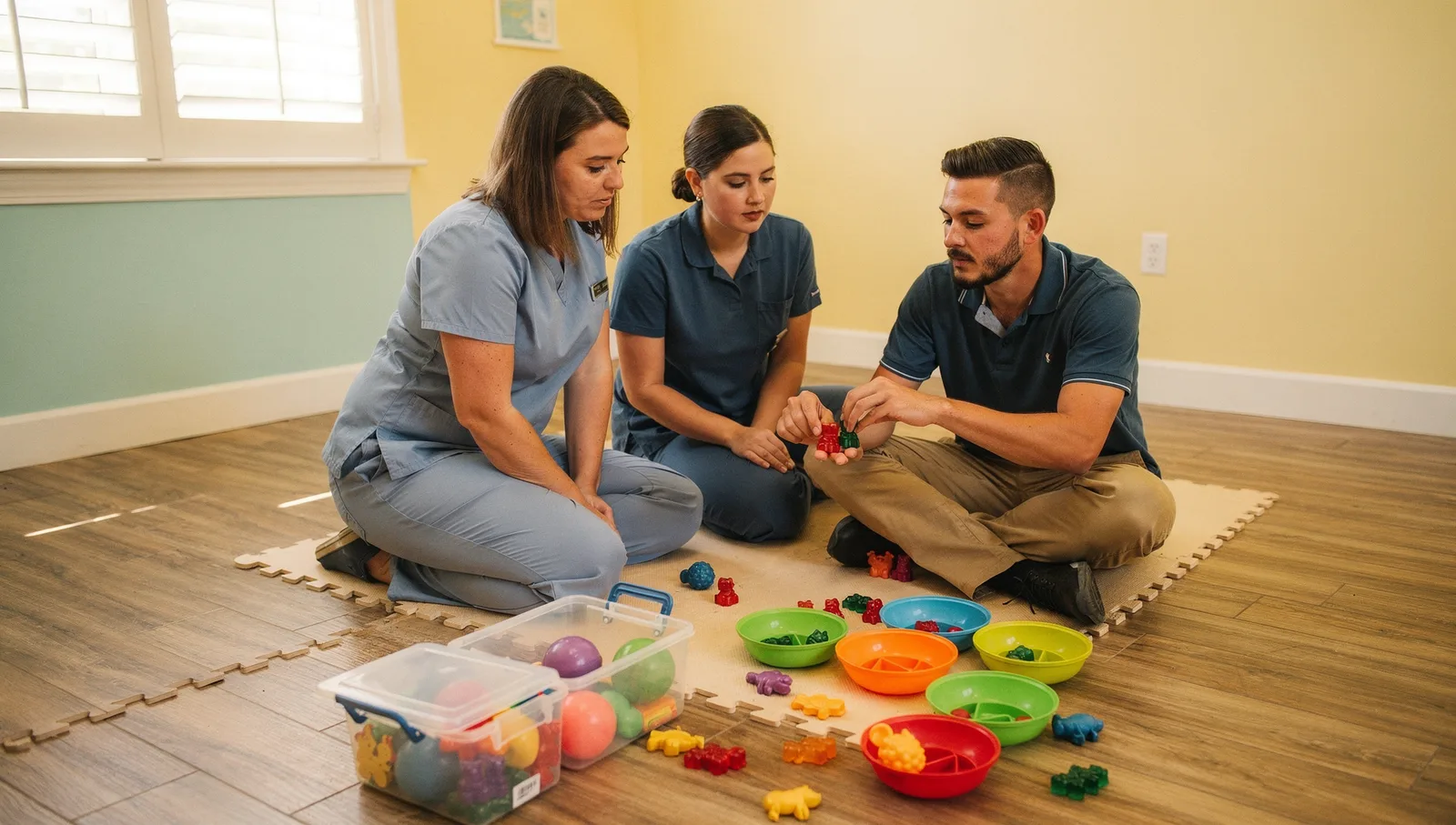
“The trainee must complete at least 40 hours of training covering this curriculum outline in no fewer than 5 days and no more than 180 days.”
— Behavior Analyst Certification Board, Credentialing Organization
“Findings indicated that most interventions were effective, with behavioral skills training (BST) emerging as the most used and successful approach.”
— Behavior Analysis in Practice, Peer-Reviewed Journal, Springer
Late at night, many parents across Miami-Dade and the Florida Keys find themselves searching online for answers after an autism diagnosis. The therapy journey often feels overwhelming when you face long waitlists, endless paperwork, and confusing acronyms. Knowing how your child's therapy team is educated brings peace of mind and helps you advocate for quality care.
Technicians deliver day-to-day behavioral interventions under close supervision, qualifying for certification through a 40-hour course completed within a 5-to-180-day window (detailed below) (bacb.com).
Eligibility Requirements and Initial Training Timelines for Behavior Technicians#
Becoming a Registered Behavior Technician (RBT) starts with basic entry rules set by the Behavior Analyst Certification Board (BACB). Candidates must be at least 18 years (uaptc.edu) old and hold a high school diploma or national equivalent before scheduling the certifying exam. These baseline requirements help ensure that entry-level staff have the maturity and academic background needed to handle clinical documentation and follow behavior plans safely.
Geographic location also dictates who can pursue this credential. Effective January 1, 2023, only individuals who reside in the United States, Canada, Australia, and the United Kingdom may apply for BACB certification (uaptc.edu). Applicants must also clear criminal background checks and abuse registry screenings before sitting for the exam.
The initial training timeline balances thorough learning with steady momentum:
- Trainees must finish their 40-hour course across a window of at least 5 days (bacb.com).
- Trainees must complete the entire course in no more than 180 days.
- Verify age & diploma
- 40-hour training (5-180 days)
- Initial competency assessment
- Background checks
- BACB exam
- Annual renewal
BACB Curriculum Standards for Training Delivery and Certification Records#

Instructional standards ensure that technicians learn through active engagement rather than passive watching. Beginning January 1, 2026, applicants must complete coursework that meets updated 2026 BACB training requirements (bacb.com). Under these 2026 curriculum rules, the 40 hours include 38 hours allocated across specific core sections and 2 unallocated hours that trainers can assign to any topic needing deeper study.
Training formats can be flexible, but they must remain interactive. However, assigned independent readings cannot count toward the 40-hour instruction total (bacb.com).
Following instruction, specific documentation requirements apply:
- The Responsible Trainer must issue a single-document certificate named the RBT 2026 40-Hour Training Certificate (bacb.com).
- The certificate must include the trainee's full name and BACB ID.
- The record must state the exact start and end dates of the instruction.
- The document must list the total time spent engaged in training, such as 40 hours and 15 minutes.
Competency Assessments and Annual Credential Maintenance#
Finishing a 40-hour course does not grant immediate certification. Clinical practice requires hands-on verification before a technician works independently with children. As of January 1, 2024, the BACB requires employers to complete the RBT Initial Competency Assessment (uaptc.edu). This workplace evaluation confirms that the technician can execute measurement, prompting, and behavior reduction protocols accurately in real-world settings.
Maintaining an active credential requires continuous oversight and regular evaluation. Technicians do not keep their title indefinitely after passing the initial exam. Annual maintenance requires technicians to pass the RBT Competency Assessment each year, maintain ongoing clinical supervision, submit an annual renewal application, and comply with all BACB ethical requirements (online.uc.edu). These recurring checkpoints ensure clinical teams maintain high standards over time.
Curricular and Degree Distinctions Between RBT and BCBA Pathways#
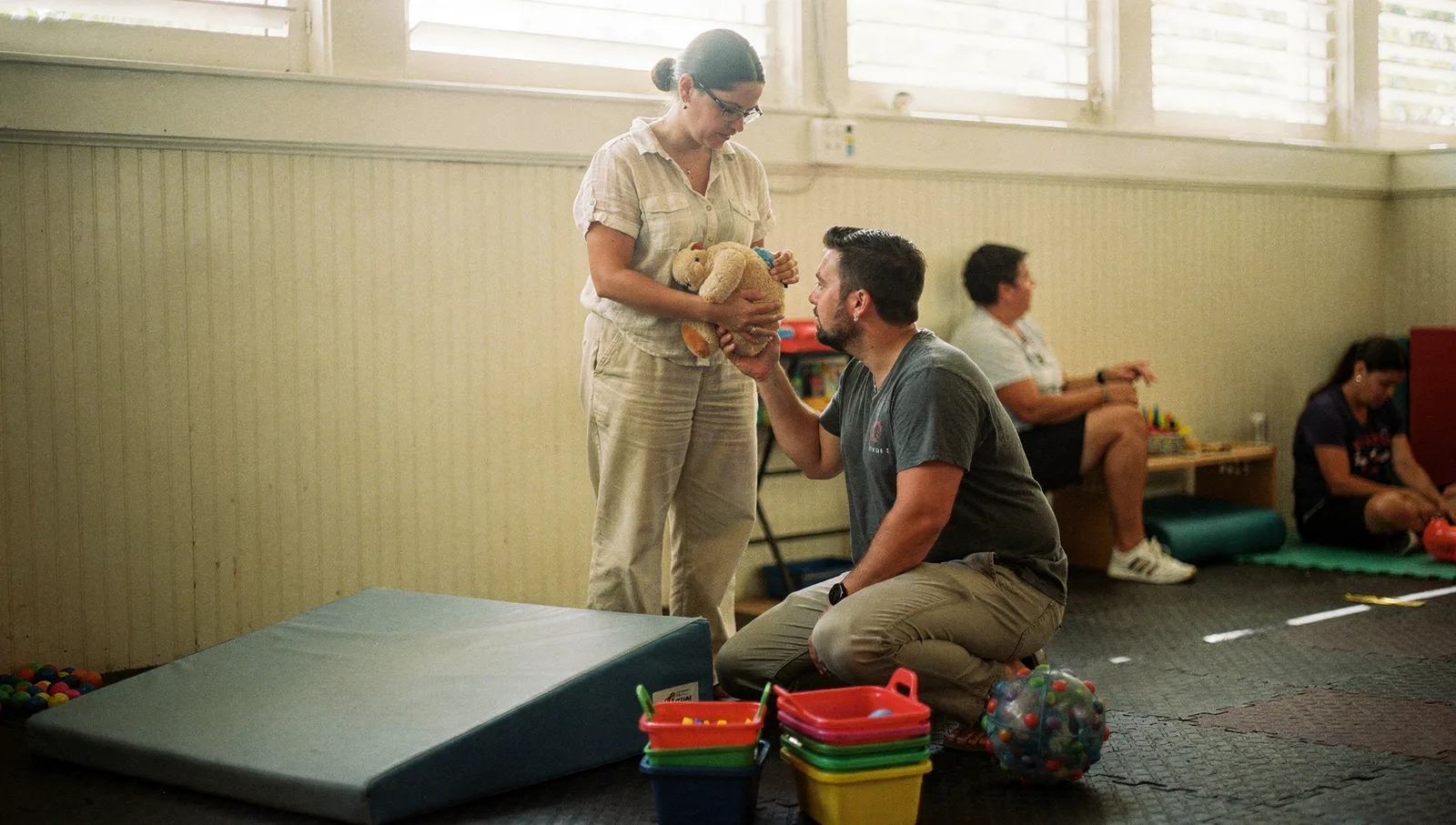
Understanding who provides and oversees your child's care can demystify the therapy team. Many families wonder about the differences between a technician and a supervising analyst. While both work directly to improve communication and daily living skills, their training depth and clinical roles differ significantly.
Technician training focuses on immediate implementation skills. An RBT candidate completes a 40-hour program covering basic ABA assessment, measurement techniques, skill acquisition programs, behavior reduction procedures, objective documentation, and ethical standards (drexel.edu). Technicians implement day-to-day programs designed by their supervisors.
A Board Certified Behavior Analyst (BCBA) carries advanced clinical responsibility. BCBA candidates must hold a master's degree and complete 315 hours of behavior-analytic coursework (drexel.edu). Behavior analysts design the intervention plans, analyze assessment data, supervise frontline technicians, and adjust protocols when progress slows.
| Credential | Degree Required | Coursework Duration | Core Responsibilities |
|---|---|---|---|
| Registered Behavior Technician (RBT) | High school diploma or equivalent (uaptc.edu) | At least 40 hours (completed in 5 to 180 days, as noted above) (link.springer.com) | Direct plan implementation, daily measurement, basic skill acquisition protocols (drexel.edu) |
| Board Certified Behavior Analyst (BCBA) | Master's degree (drexel.edu) | 315 graduate coursework hours | Clinical assessment, program design, technician supervision, protocol modification |
Foundational Applied Behavior Analysis Principles and the ABC Framework#
Applied Behavior Analysis (ABA) is defined as the application of principles of learning and motivation to solve problems of social significance (pmc.ncbi.nlm.nih.gov). Rather than attempting to change internal thoughts directly, the discipline focuses on observable actions that help individuals participate meaningfully in their communities.
In a foundational paper, Baer and colleagues (1968) identified seven core dimensions that guide ABA practice (pmc.ncbi.nlm.nih.gov):
- Applied (pmc.ncbi.nlm.nih.gov)
- Behavioral
- Analytic
- Technological
- Conceptually systematic
- Effective
- Capable of generalized outcomes
Clinicians evaluate these dimensions using the three-term contingency, commonly called the ABC model. This framework separates behavioral events into three distinct parts: the environmental events that happen before an action (Antecedent), the observable action (Behavior), and the events that follow it (Consequence) (iris.peabody.vanderbilt.edu). Manipulating either antecedents, consequences, or both allows therapists to increase helpful behaviors or reduce challenging ones (pmc.ncbi.nlm.nih.gov).
Behavioral Skills Training for Staff Instruction and Practice Implementation#
Applied behavior analysis relies on direct, interactive coaching to teach staff how to deliver care effectively. Passive classroom lectures rarely prepare a technician for the realities of clinical practice. To build confidence and practical skill, supervisory teams turn to Behavioral Skills Training (BST), a structured model using instruction, modeling, rehearsal, and immediate feedback.
A systematic review examining 11 peer-reviewed studies on soft skill interventions among ABA practitioners identified Behavioral Skills Training as the most frequently used and successful approach (link.springer.com). BST helps technicians master compassionate communication, rapport building, and active listening.
Behavioral Skills Training also bridges language needs in multicultural learning environments. In an evaluation of culturally responsive class-wide behavior supports, educators trained through BST successfully increased their frequency of verbal praise and error correction in both English and Spanish (rucore.libraries.rutgers.edu). This finding shows that structured modeling helps staff deliver interventions fluently in a family's primary language.
Assent-Based Care and Ethical Target Evaluation#
Modern behavior therapy emphasizes dignity, personal autonomy, and compassionate care. Technicians are trained to watch for non-verbal signs of discomfort or withdrawal, ensuring that the child willingly participates in learning activities. Under BACB professional development standards starting in 2026, using best practices for implementing assent-based treatment qualifies as approved professional development content for RBTs (bacb.com).
Ethical standards also require clinical teams to monitor how procedures affect each child. Section 2.15 of the BACB Ethics Code dictates that practitioners assess for potential harmful side effects of intervention procedures (pmc.ncbi.nlm.nih.gov). When a child shows persistent signs of distress during an intervention, the clinical team must stop, evaluate environmental stressors, and adjust the approach.
Technicians and analysts must also examine the goals they set. To ensure goals respect personal individuality, practitioners can ask themselves whether a behavior was targeted primarily because it differs from neurotypical norms (pmc.ncbi.nlm.nih.gov). If so, treatment plans should reorient toward supporting the client's unique values, personal strengths, and overall well-being.
Cultural Responsiveness Tools and Organizational Support Practices#
Every family brings distinct traditions, communication preferences, and values to the therapy process. A one-size-fits-all clinical approach can leave parents feeling unheard or misunderstood, particularly when navigating services in diverse communities. ABA providers use targeted self-reflection tools to evaluate their cultural responsiveness.
Two documented indirect assessment tools help practitioners evaluate their daily practice:
- The Cultural Responsiveness Curriculum Competency Assessment Checklist (rucore.libraries.rutgers.edu).
- The Culturally Responsive Supervision Self-Assessment (CRSS).
Both self-assessments allow behavior analysts and technicians to reflect on cultural humility and integrate responsive habits into daily supervision (rucore.libraries.rutgers.edu).
At the organizational level, agencies can adopt structured practices to better serve diverse communities. Documented recommendations for supporting culturally and linguistically diverse families include establishing family liaison roles, conducting thorough intake interviews, offering adaptive caregiver training, translating written materials, and hiring staff who reflect the communities they serve (rucore.libraries.rutgers.edu).
Alternative Technician Credentials and Healthcare Coverage Factors#
When evaluating career pathways or selecting a provider, consider these key practical questions:
- Does your state's Medicaid program or your private health insurance plan require an RBT credential specifically, or do they reimburse services delivered by alternative technician titles?
- What are the out-of-pocket copays and deductibles associated with your specific insurance plan?
- How long is the provider's active waitlist for after-school or weekend therapy appointments?
- Does the clinical team provide direct communication, intake paperwork, and parent training in your home language?
Understanding these baseline professional standards helps you partner with providers who respect your child's dignity and your family's cultural background.
| Credential | Minimum Degree Required | Required ABA Coursework | Clinical Role and Practice Scope |
|---|---|---|---|
| Registered Behavior Technician (RBT) | High school diploma or equivalent | At least 40 hours completed in 5 to 180 days | Direct implementation of skill acquisition and behavior reduction plans designed by supervisors |
| Board Certified Behavior Analyst (BCBA) | Master's degree | 315 graduate coursework hours | Conducting assessments, designing treatment programs, and supervising technicians |
| Component | Definition and Timing | Clinical Function |
|---|---|---|
| Antecedent (A) | Environmental events that occur before a behavior | Manipulated to prompt, prevent, or set occasions for specific behaviors |
| Behavior (B) | The observable and measurable action of the individual | Targeted for increase, reduction, or modification |
| Consequence (C) | Environmental events that follow the behavior | Altered through reinforcement or punishment to affect future behavior occurrence |
RBT 40-Hour Training Pace and Timeline Calculator
Calculates the estimated completion time in weeks and calendar days for the BACB 40-hour Registered Behavior Technician (RBT) training course based on planned weekly study hours, verifying that the schedule fits within the mandatory 5-day minimum and 180-day maximum window.
Total required coursework:
Estimated completion time:
Estimated calendar duration:
Meets BACB 5-to-180 day rule (1 = Yes, 0 = No):
Disclaimer
The information provided by Permuy Diversity Intervention is for general educational purposes only and is not a substitute for professional medical advice, diagnosis, or treatment. ABA therapy and mental-health services are individualized; always consult Dr. Luis D. Permuy, LMHC-QS, or a qualified clinician about your child's specific needs. Insurance coverage, eligibility, and Florida Medicaid rules change - verify current details with your plan and the Florida Agency for Health Care Administration.
Sources
- RBT vs. BCBA Career Paths | Drexel University - Drexel (2025-04-21)
- [PDF] RBT 2026 40-Hour Training Requirements and Curriculum Outline - Bacb (2026-10-09)
- What Is the Difference Between BCBA and RBT? - Online (2024-07-10)
- Registered Behavior Technician Certification Training - Uaptc (2026-10-09)
- Affirming Neurodiversity within Applied Behavior Analysis - PMC (2026-10-09)
- Applied Behavior Analysis in Children and Youth with Autism Spectrum Disorders: A Scoping Review - PMC (2026-10-09)
- Page 2: The ABC Model - Iris (2026-10-09)
- a systematic literature review of cultural responsiveness in - Rucore (2026-10-09)
- Exploring the Effects of Soft Skill Training among ABA ... - Link (2026-10-09)
- RBT Professional Development: In-Service and ACE Events - Behavior Analyst Certification Board - Bacb (2026-10-09)