
what is ABA therapy?
Short answer
ABA therapy is a structured behavioral intervention that uses reinforcement and systematic teaching to build skills in children with autism. In research on ABA-based interventions, 63% to 88% of study records reported improvement across outcome categories, with meta-analytic standardized mean change effect sizes of 0.68 for adaptive behavior composite and 0.74 for receptive language. Therapy combines one-on-one sessions with home-based practice, breaking complex behaviors into teachable steps.
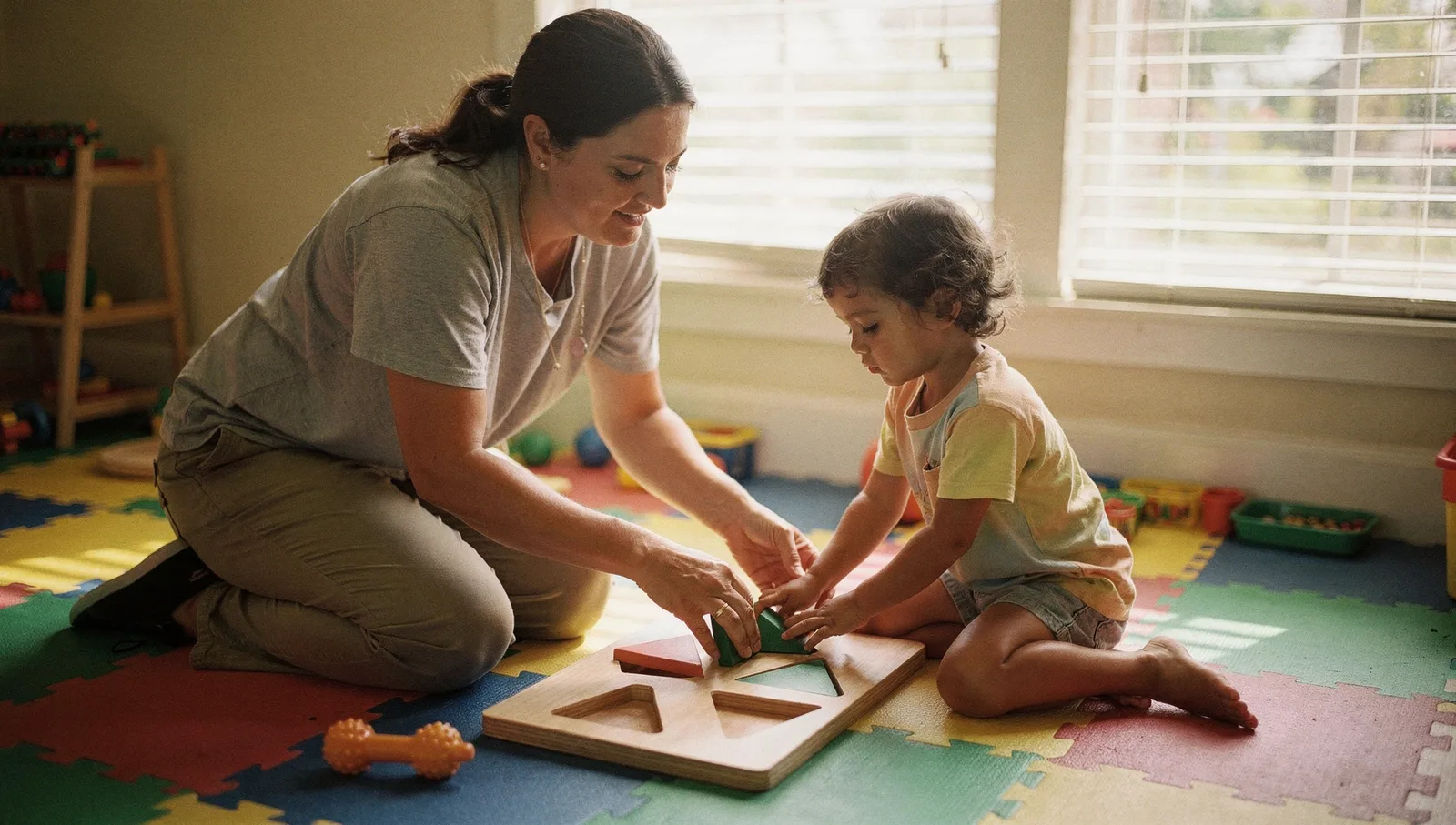
What Is ABA Therapy? Definition and Core Principles#
You are searching late at night because your child has been diagnosed with autism, and you have heard the term "ABA therapy" but you are not sure what it means or whether it is right for your family. You are not alone. Many parents wonder if this approach can help their child communicate, manage difficult moments, and build independence.
ABA therapy stands for Applied Behavior Analysis. It is a structured, evidence-based approach that teaches children with autism new skills by breaking down complex behaviors into smaller, manageable steps and using positive reinforcement (rewards that matter to your child) to encourage those steps. The core idea is simple: observe what your child does, understand what comes before the behavior and what happens after it (the Antecedent-Behavior-Consequence model), and then use that understanding to teach new skills and reduce behaviors that get in the way of learning and connection.
ABA is not about forcing compliance or "fixing" autism. Modern ABA respects the child's autism as a neurological difference and part of who they are, rather than treating it as a disease to be eliminated or fixed. The goal is to help your child build skills they actually need and want, whether that is asking for help, playing with a sibling, ordering food, or managing transitions, so they can participate more fully in their own life and community.
How ABA Works: Observable Behavior Change in Practice#
ABA therapy rests on one fundamental principle: all behavior is learnable and changeable through the right teaching methods. When a therapist works with your child, they are not guessing or hoping for improvement.
Here is how it works in practice:
Your child might cry to escape a difficult task, or repeat a word to get attention, or rock to calm their nervous system. If your child screams to escape a task, you teach them to say "break" or use a card. Parent and caregiver involvement in practicing strategies at home and in the community is essential for skill generalization and long-term success, covered in detail below.
A concrete example: Your child does not ask for help with difficult tasks. Instead, they cry or throw things. A therapist might use Discrete Trial Training (short, focused teaching sessions) to practice asking "help please" with a puzzle that is just hard enough to need support. Each time your child says "help please," they get the help immediately and praise. Over weeks, the skill becomes automatic. Your child still finds the task hard, but now they have a way to ask for what they need instead of crying.
Positive Reinforcement and Evidence-Based Techniques#
Positive reinforcement involves giving the child something they value immediately after they perform the desired behavior, with timing and knowing what the child actually wants being critical. For one child, that might be a few seconds of a favorite video. For another, it might be a high-five and a specific phrase of praise. For a third, it might be a piece of fruit or a chance to spin a toy. The BCBA works with you to figure out what your child finds rewarding and uses those rewards strategically to teach.
ABA uses several teaching methods, depending on what skill you are building:
This works well for teaching specific skills like naming colors, following one-step directions, or greeting someone.
- Natural Environment Teaching (NET): Teaching happens during everyday routines, mealtime, getting dressed, playing outside. You use the natural rewards that come from the activity itself (eating the snack, going outside, playing with the toy) to reinforce the skill. This helps skills feel less artificial and transfer more easily to real life.
- Modeling and imitation: Your child watches you do the behavior, then imitates it, and gets rewarded. This is how many children learn social skills and daily routines.
In a meta-analysis of ABA-based interventions, the standardized mean change effect size was 0.74 for receptive language and 0.68 for adaptive behavior composite. Across studies, 63% to 88% of children and youth with autism appear to show improvement in communication, behavior, and adaptive skills.
Modern ABA: Neurodiversity-Affirming, Family-Centered, and Strengths-Based Practice#
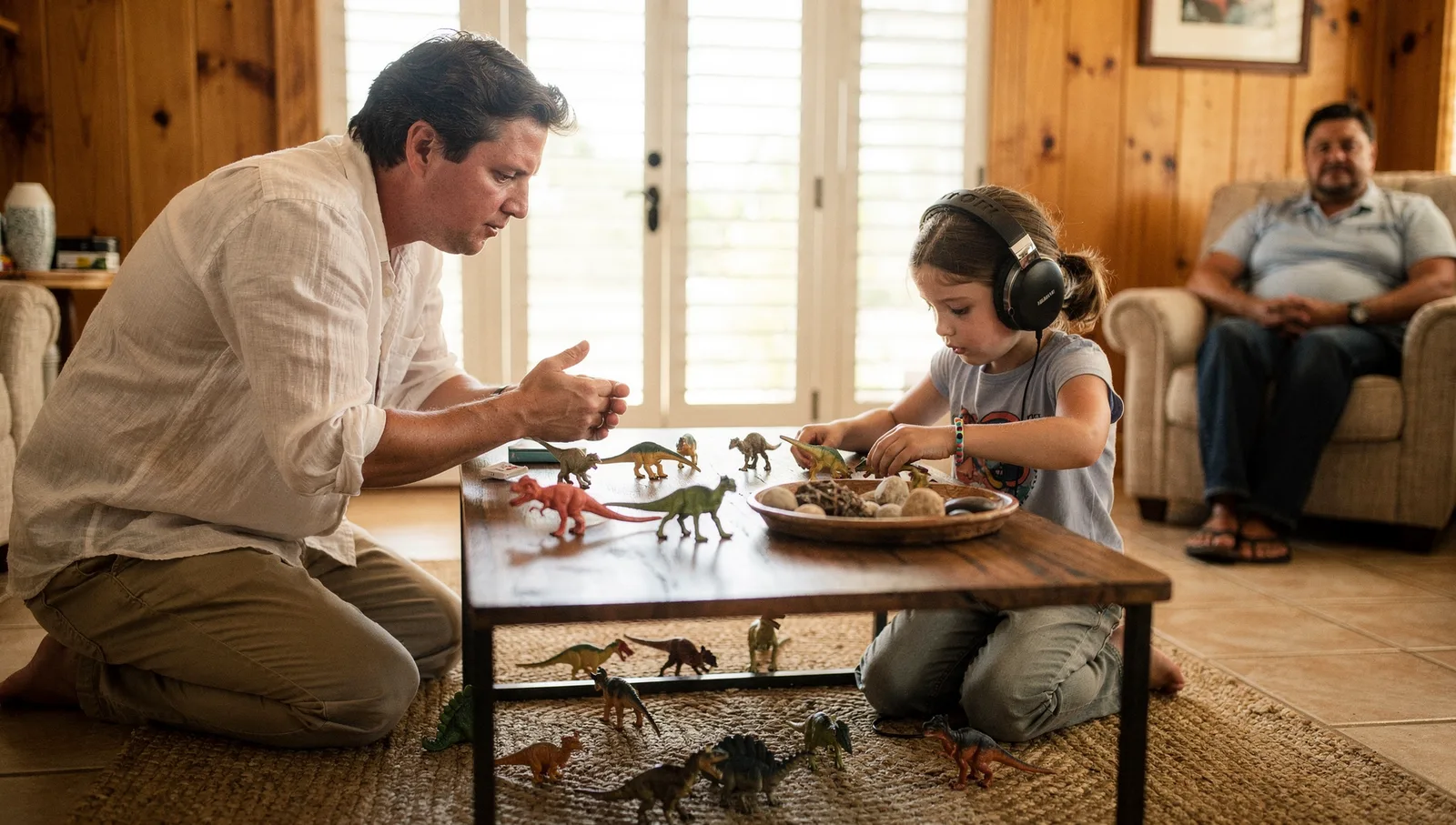
Modern, neurodiversity-affirming ABA is different. It starts from a simple truth: your child's brain works differently, and that difference comes with real strengths, attention to detail, pattern recognition, deep focus, creative thinking, loyalty, honesty. The goal of therapy is not to make your child "normal." It is to help them build skills they need while honoring their autism and their unique way of being in the world.
Shifting from Deficit-Focused to Strengths-Based Practice#
A deficit-focused approach asks: "What is wrong with this child? What behaviors do we need to eliminate?" A strengths-based approach asks: "What does this child do well? What are they interested in? How can we build on that?"
In strengths-based ABA, a therapist notices that your child loves dinosaurs. Instead of ignoring that interest, they use it. They teach communication skills by talking about dinosaurs. They build social skills by having your child share dinosaur facts with peers. They teach reading by using dinosaur books.
Neurodiversity-affirming ABA also means respecting your child's sensory needs and communication style. Stimming helps your child regulate their nervous system. Instead, the therapist might teach your child when and where stimming is okay, or teach alternative ways to meet that sensory need in different settings.
Cultural Competency and Equitable Access in ABA Service Delivery#
Autism and autism services are not one-size-fits-all.
A culturally competent ABA team asks: What does your family want for your child? What matters most to you? What are the barriers you face, language, transportation, cost, trust? They work with your family's values and goals, not against them. They explain ABA in your language, not jargon. They respect your family's role as the expert on your child.
Equitable access also means addressing the real barriers. A good ABA provider works to reduce those barriers, offering telehealth sessions where appropriate, flexible scheduling, and clear communication about what Medicaid covers and what it does not.
Measuring What Matters: Quality of Life and Social Participation, Not Just Compliance#
Modern ABA measures what actually matters: Does your child have friends? Can they order food at a restaurant? Do they participate in family meals? Can they ask for a break when they are overwhelmed? Are they happier?
Person-centered planning means starting with your child's own goals and preferences, not the therapist's agenda. If your teenager wants to learn to use public transportation so they can go to the mall with friends, that becomes a therapy goal. If your child wants to play soccer, you work toward the skills that make that possible, following a coach's instructions, managing frustration, taking turns.
Measuring quality of life means tracking things like: Does your child have opportunities to participate in their community? Do they have meaningful relationships? Are they developing skills that will help them as they grow? These are harder to count than "compliance rate," but they are what a life actually looks like.
How ABA Therapy Is Delivered: The BCBA, Assessment, and Your Role#
ABA therapy is not a one-size-fits-all service. It is personalized, based on your child and your family's specific needs. That personalization starts with a thorough assessment and continues with regular monitoring and adjustment.
The BCBA's Role in Assessment and Personalized Planning#
The BCBA is not the therapist who sits with your child every day, that is usually a Registered Behavior Technician (RBT) or a therapist trained in ABA. But the BCBA is the architect of your child's plan.
Here is what a BCBA does:
What happens right before? What does your child get out of it? Goals might include: "Use a 3-word phrase to request a preferred item," "Transition between activities with a 2-minute warning," or "Participate in a 10-minute group activity with peers." If your child is not making progress on a goal, the BCBA changes the approach. If your child masters a goal, the BCBA moves on to the next one.
Parent and Caregiver Involvement as Core to Success#
Parent and caregiver involvement and practice of strategies at home and in the community is essential for skill generalization and long-term success. This is called generalization, the ability to use a skill in different places, with different people, and in different situations.
Here is what parent involvement looks like:
- Training: The BCBA and therapist teach you the same strategies they use in sessions so you can practice with your child at home. This might mean learning how to break down a task into steps, how to give clear instructions, how to reward your child, or how to respond calmly when your child is upset.
- Practice: You use these strategies during everyday routines, meals, bedtime, getting ready for school, playing. You do not need to set aside special "therapy time." You weave the strategies into your normal day.
- Data collection: You might keep simple notes or use an app to track whether your child is using the new skill at home. This data helps the BCBA see if the strategy is working and adjust if needed.
- Communication: You stay in touch with the therapist and BCBA. You tell them what is working, what is hard, what your child is doing at home that you did not see in therapy. This feedback shapes the plan.
Parent involvement also means the therapist and BCBA listen to you. You know your child better than anyone. You know what motivates them, what upsets them, what your family's schedule and values are. A good ABA team treats you as a partner, not just someone who follows instructions.
Skill Development Across Communication, Behavior, and Adaptive Skills#
ABA can target many different skill areas, depending on your child's needs and your family's goals.
Communication skills include understanding what others say (receptive language), expressing wants and needs (expressive language), using words or AAC to have conversations, and understanding social communication (like when to take turns in a conversation or how to greet someone). For a non-speaking child, this might mean teaching them to use a communication device or app. For a child who speaks but struggles with conversation, it might mean teaching them to ask questions, comment on what others say, or stay on topic.
Behavior skills include managing emotions, handling frustration or transitions, asking for a break, following instructions, and reducing behaviors that get in the way of learning (like aggression, self-injury, or extreme avoidance). This is not about obedience. It is about giving your child tools to manage their own nervous system and communicate their needs.
Adaptive skills include self-care (eating, toileting, dressing, hygiene), following routines, playing with toys or peers, doing chores, and managing daily life. These are the skills that lead to independence and participation in family and community life.
Practical Considerations: Cost, Comparisons, and Life-Stage Planning#

ABA therapy is an investment in your child's future. Understanding the costs, how ABA fits with other therapies, and how to plan for your child's changing needs as they grow will help you make the best decisions for your family.
ABA Therapy Cost and What to Expect#
The cost of ABA therapy varies widely depending on how many hours per week your child receives; whether sessions are in-person or telehealth, and where you live. However, coverage rules, the number of hours approved, and out-of-pocket costs differ by plan and by your child's age.
If you have private insurance, coverage varies, some plans cover ABA fully, some cover part of it, and some do not cover it at all. If you are uninsured or underinsured, ABA can be expensive, and you may need to explore sliding-scale providers, grants, or other funding options.
The best first step is to contact your insurance company or Medicaid plan and ask: Does my child's plan cover ABA? How many hours per week are approved? What is my out-of-pocket cost? A bilingual ABA team that works with your insurance can also help you navigate these questions and advocate for your child's coverage.
ABA vs. Speech Therapy and Occupational Therapy: How They Complement Each Other#
Many parents ask: Should my child have ABA, or speech therapy, or occupational therapy? The honest answer is often: your child may benefit from more than one.
Speech-language pathology (SLP) focuses on communication, how your child understands and uses language, how they eat and swallow, and how they use their voice. A speech therapist might teach your child to use a communication device, improve pronunciation, or understand grammar. An ABA therapist can reinforce communication skills your child is learning with a speech therapist, and a speech therapist can help an ABA therapist understand your child's communication needs more deeply.
Occupational therapy (OT) focuses on daily living skills, fine motor skills (like writing or using utensils), sensory processing, and participation in activities that matter to your child, school, play, self-care. An OT might help your child with handwriting, managing sensory sensitivities, or organizing their day. Like SLP, OT and ABA can work together. An ABA therapist can help your child practice the motor skills or routines an OT is teaching.
The question is not "which one is better", it is "what does my child need right now?" Many children benefit from ABA plus speech therapy, or ABA plus OT, or all three. A good team communicates across disciplines so your child is not getting conflicting advice and is making progress on all fronts.
Transition Planning: From Early Intervention to Adulthood and Community Integration#
Your child's needs change as they grow, and ABA evolves with them.
Parent coaching is especially important because your child spends most of their time with you.
Goals might include following classroom routines, participating in group activities, or managing transitions between classes.
This might include job training, using public transportation, managing money, or building social relationships. Person-centered planning becomes even more important, your teenager's own goals and preferences should drive the plan.
Adulthood: Some young adults continue ABA or related behavioral support to maintain skills, learn new ones, or navigate employment and community life. Others transition to other supports. The goal is always maximum independence and participation in the community your child chooses.
A good ABA provider thinks ahead. They help you plan for transitions, prepare your child for changes, and build skills that will matter in the next stage of life.
Finding Quality ABA Services in Your Community#
If you are looking for ABA therapy in Homestead, Kendall, Hialeah, or anywhere across Miami-Dade County, Monroe County, or the Florida Keys, you have a few options to explore.
Start by asking: Does the provider have BCBAs on staff? Are the therapists trained and supervised? Do they offer services in your language (English or Spanish)? Do they work with your insurance or Medicaid plan? Do they offer flexibility, in-person sessions, telehealth, or a mix? Do they involve parents as partners? Do they take a neurodiversity-affirming, strengths-based approach?
You can also ask your child's pediatrician, school, or local autism organization for referrals. Many providers offer a free consultation so you can ask questions and see if they are a good fit for your family.
We serve Key West, Marathon, Hialeah, Kendall, Homestead, and surrounding areas. If you are exploring options, we welcome a conversation about what your child and family need.
Your Next Step: Validate Your Child's Needs and Your Family's Goals#
But the real question is: Is ABA right for your child and your family?
Here is a concrete checklist to help you decide:
If you are not sure, start with a developmental evaluation.
- What are your family's top goals for your child? Communication? Independence? Behavior? Social skills? School success? Write down 2 to 3 things that matter most to you. A good ABA provider will align their plan with your goals, not impose their own.
- What barriers do you face? Cost? Waitlists? Transportation? Language? Childcare for siblings? Be honest about what would make therapy work for your family. A provider who understands your real situation can help you problem-solve.
- Do you want a provider who takes a neurodiversity-affirming, strengths-based approach? Ask potential providers directly: How do you honor autism as part of who my child is? How do you build on my child's strengths? How do you involve parents as partners? If you have the time and energy to do that, ABA is more likely to succeed. If you are overwhelmed, talk honestly with a provider about what is realistic for your family.
The next step is to reach out to a bilingual ABA team that gets your family's situation, the long drives from the Keys, the need for Spanish-language support, the months-long waitlists, the fear that you are running out of time. A professional ABA assessment and a conversation with a BCBA can answer your specific questions and help you build a plan that actually works for your child and your life.
| Teaching Method | Description | Best For |
|---|---|---|
| Discrete Trial Training (DTT) | Short, focused teaching sessions (5 to 10 minutes) with clear instruction, immediate response, and feedback | Specific skills like naming colors, following directions, or greeting |
| Natural Environment Teaching (NET) | Teaching during everyday routines (mealtime, getting dressed, playing outside) using natural activity rewards | Skills that transfer easily to real life and feel less artificial |
| Modeling and Imitation | Child watches you perform the behavior, imitates it, then receives reward | Social skills and daily routines |
| Skill Area | Improvement Rate | Effect Size |
|---|---|---|
| Communication, Behavior, and Adaptive Skills (Overall) | 63% to 88% show improvement | N/A |
| Receptive Language (understanding) | N/A | 0.74 |
| Adaptive Behavior (self-care, routines, independence) | N/A | 0.68 |
| Step | What Happens | Purpose |
|---|---|---|
| Observe and Measure | BCBA watches and records exactly what behaviors occur, when they occur, and what happens after | Establish objective data about your child's current behavior |
| Identify the Function | Determine why the behavior happens (escape, attention, sensory, or other need) | Understand the underlying motivation behind the behavior |
| Teach a Replacement Skill | Teach a new skill that meets the same need in a more useful way | Give your child a better alternative to the unwanted behavior |
| Use Positive Reinforcement | Provide immediate reward (within seconds) after your child performs the desired skill | Increase the likelihood your child will repeat the new skill |
| Practice in Real Life | Skills are reinforced at home, school, and community settings with parent and caregiver involvement | Ensure skills generalize and become automatic in daily life |
ABA Therapy Insurance and Out-of-Pocket Cost Estimator
Calculates estimated annual and monthly family out-of-pocket costs for ABA therapy based on prescribed weekly hours and health insurance plan details (deductible, coinsurance, and out-of-pocket maximum).
Total Annual Billed Charges:
Estimated Annual Family Out-of-Pocket Cost:
Average Monthly Out-of-Pocket Cost:
Estimated Annual Insurance Coverage:
Frequently Asked Questions
What is an example of ABA therapy in practice?
A child who throws things or cries instead of asking for help might work with a therapist using short, focused lessons to practice saying "help please" with a slightly difficult puzzle. Each time the child uses the phrase; they receive help immediately plus praise. Over weeks, this new skill becomes automatic, giving the child a functional way to communicate instead of escalating behavior.
Is ABA therapy about forcing my child to comply or 'fixing' autism?
No. Contemporary ABA respects neurodiversity and doesn't aim to eliminate autism or force obedience. Instead, it focuses on teaching your child practical abilities they actually want to develop, such as communicating needs, interacting with peers, or handling changes, so they can engage more independently in daily life and their community.
How is ABA therapy demand growing?
National all-payer claims data show a 266.9% increase in ABA therapy visit volume between 2019 and 2024, indicating rapid growth in access to and use of this intervention across the United States.
What is the Antecedent-Behavior-Consequence model and how does it guide ABA therapy?
The Antecedent-Behavior-Consequence model is the foundational framework ABA therapists use to understand and change behavior. Antecedent refers to what comes before a behavior, behavior is the action itself, and consequence is what happens after it. By observing and analyzing these three elements, therapists gain insight into why a child engages in a particular behavior. This understanding allows them to design targeted interventions that teach new skills to meet the same underlying need in more useful ways.
What are some examples of rewards used in ABA therapy, and why does the choice of reward matter?
Rewards in ABA therapy can be activities, treats, or praise, whatever genuinely motivates the individual child. The specific choice matters because using something the child actually enjoys makes the therapy more effective, whereas rewards adults assume children want often fail. Timing is equally important; delivering rewards within seconds of the desired behavior strengthens the connection. BCBAs help families identify their child's true preferences to maximize learning outcomes.
What are the main differences between Discrete Trial Training and Natural Environment Teaching in ABA?
Discrete Trial Training breaks skills into short, structured lessons with clear instructions, responses, and immediate rewards, ideal for teaching specific tasks like colors or directions. Natural Environment Teaching integrates learning into daily activities like meals or play, using the activity's natural consequences as reinforcement. This approach makes skills feel more authentic and transfer better to real-world situations.
What does research show about the effectiveness of ABA-based interventions for children with autism?
ABA-based interventions produce meaningful improvements in how children with autism function daily. Research appears to show substantial gains in receptive language and adaptive behaviors like self-care and independence. 63% to 88% of study records reported improvement across outcome categories in a systematic review of ABA in children and youth with autism. These improvements translate to real, observable changes in everyday functioning.
Disclaimer
The information provided by Permuy Diversity Intervention is for general educational purposes only and is not a substitute for professional medical advice, diagnosis, or treatment. ABA therapy and mental-health services are individualized; always consult Dr. Luis D. Permuy, LMHC-QS, or a qualified clinician about your child's specific needs. Insurance coverage, eligibility, and Florida Medicaid rules change - verify current details with your plan and the Florida Agency for Health Care Administration.
Sources
- pmc.ncbi.nlm.nih.gov (via Perplexity Sonar) - PMC (2026-08-29)
- Applied Behavioral Analysis (ABA) - Therapy Types - Helloalma (2026-09-08)