
What to expect in the first month of ABA therapy for a newly diagnosed child in Florida
Short answer
Your child starts with a detailed assessment by a Board Certified Behavior Analyst, then enters a relationship-building phase called pairing. Structured sessions follow, focusing on increasing positive behaviors and decreasing challenging ones. You'll practice strategies at home, track early progress through data, and work through Florida's insurance approval process. Expect resistance or anxiety in week two or three as novelty fades, before your child settles into routine.

“The first month of ABA therapy usually focuses on learning about your child, building a relationship, setting routines, and collecting baseline data.”
— DoubleCare ABA
“This initial meeting should help the therapist learn how your child communicates, plays, asks for help, responds to new people, and handles transitions.”
— DoubleCare ABA
Why First-Month ABA Matters: The Permuy Approach to Invisible Wins and Real Support#
You've just gotten the diagnosis. Your child is autistic. And now you're facing a waitlist, a stack of insurance forms, and the question: what happens in that first month when therapy finally starts?
The first month is not about dramatic behavior change. It is about building the foundation, trust between your child and the therapist, clarity about what your child can and cannot do right now, and a realistic plan that fits your family's life. Many parents expect to see big wins immediately. What actually happens is quieter and more important: your child learns that this person is safe, your therapist learns how your child communicates and what motivates them, and you learn what your real role is going to be.
Most families stumble during the first month, not because ABA doesn't work, but because the first month feels slow, confusing, or overwhelming. You're managing insurance calls, driving to sessions (sometimes long drives in Miami-Dade or the Keys), adjusting to a new routine, and wondering if anything is actually happening. But you have to know what to look for.
Beyond Logistics: What Parent Coaching and Candid Guidance Actually Change in Month One#
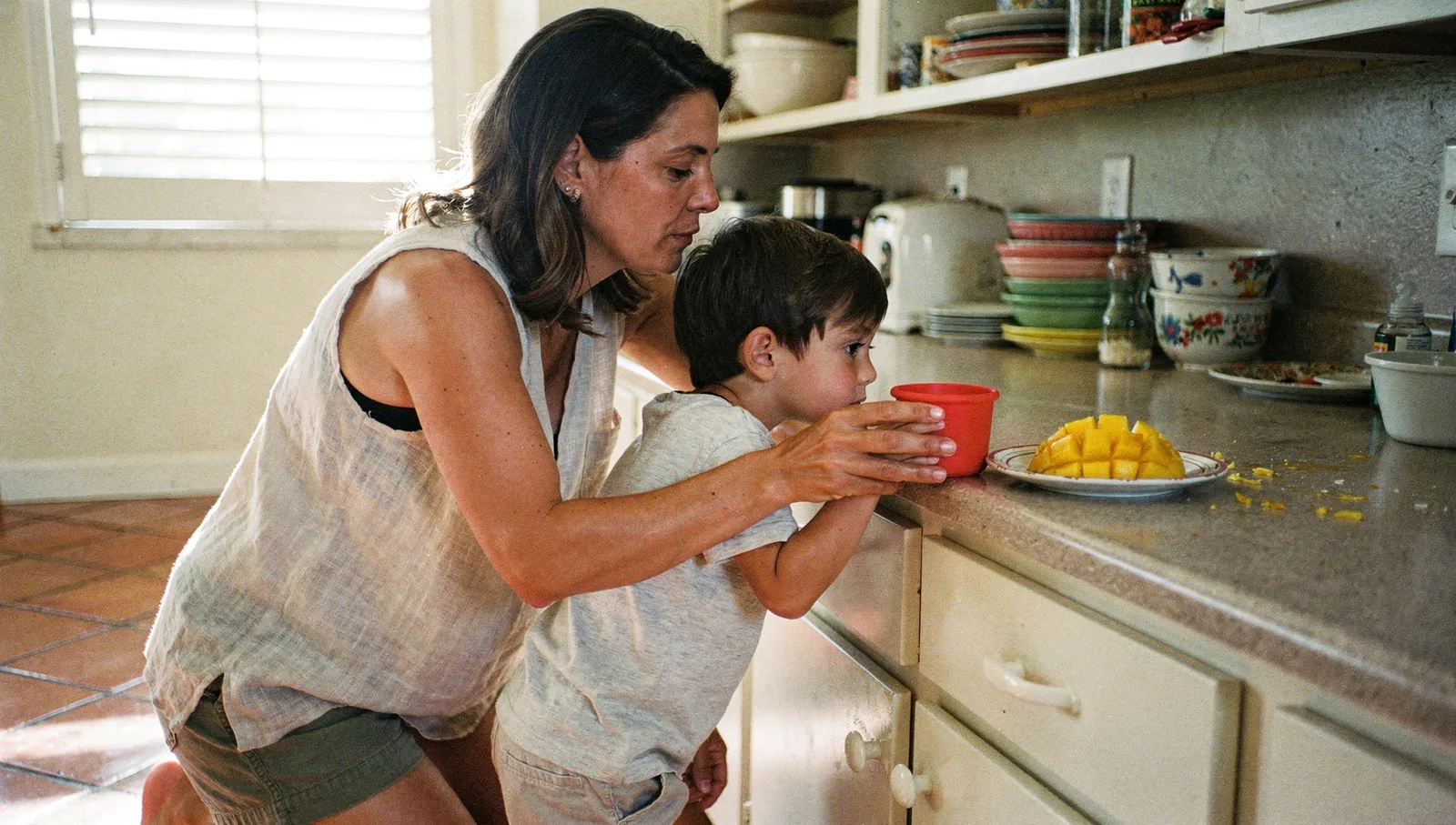
The invisible work of month one is parent coaching. Your therapist will ask you to do things at home, small, specific things, that feel less dramatic than the therapy session itself. This is where the real change lives.
ABA therapy aims to increase positive behaviors, decrease challenging behaviors, and maintain learned skills across aspects of life, according to autism.org. But that only happens if the work extends beyond the therapy room. A therapist sees your child for a few hours a week. You see them for the rest of the time. If you are not practicing the same strategies, the skills your child learns in session stay locked in that room.
In month one, your therapist will teach you to notice small moments: when your child is about to escalate, how they communicate frustration, what actually calms them down (not what you think should calm them). They will ask you to practice one or two specific strategies, maybe a way to give instructions, or how to respond when your child refuses. This feels awkward at first. You will forget. You will do it wrong. That is normal and expected.
The hardest part is resisting the urge to "fix" everything at once. Parents often want to tackle the biggest, most visible behavior, the meltdowns, the aggression, the refusal to eat certain foods. But your therapist might ask you to focus on something smaller first: eye contact, sitting in a chair for thirty seconds, or following a one-step direction. This is not because the big behaviors don't matter. It is because small wins build momentum, and momentum builds confidence in both your child and you.
Spotting Your Child's Growing Edges, Not Just Behavioral Reduction Targets#
One of the most important shifts in month one is learning to see your child's strengths and emerging skills, not just the behaviors you want to reduce.
Your child might not be making eye contact yet, but they might be staying in the therapy room without bolting. That is a win. They might not be following instructions, but they might be tolerating the presence of a new adult. That is a win. These are what we call "growing edges", the small, often invisible steps toward bigger skills.
Many parents come in focused on what their child cannot do or what they do "wrong." The first month is when you learn to flip that lens. Your therapist will help you notice what your child can do, even if it is small. This shift in how you see your child changes everything, not just how you respond to them, but how you feel about the journey ahead.
Getting Started: ABA Basics, Assessment, and Your Florida Authorization Path#

What ABA Therapy Is and How It Works in Florida#
Applied Behavior Analysis (ABA) is a science-based approach to understanding and changing behavior. It is built on a simple idea: behavior is learned, and behavior can be changed through structured teaching and consistent practice.
In Florida, ABA therapy for autistic children typically involves a Board Certified Behavior Analyst (BCBA) designing a treatment plan, and trained therapists delivering sessions based on that plan. The therapist uses techniques like discrete trial training (breaking skills into small, teachable steps), natural environment training (teaching in real-life settings like the kitchen or playground), and the antecedent-behavior-consequence framework (understanding what happens before a behavior, the behavior itself, and what happens after).
The goal is straightforward: increase skills your child needs (communication, self-care, social interaction) and decrease behaviors that get in the way (aggression, self-injury, refusal). But "decrease" does not mean punishment. It means teaching your child a better way to get what they need.
Florida has a robust ABA therapy network, but access varies widely depending on where you live. In Miami-Dade, you have many options. In the Keys or more rural areas, you may face longer waitlists and fewer in-home providers. This matters because it shapes which delivery model (center-based or in-home) is actually available to you.
The BCBA Consultation and Initial Assessment#
Before therapy starts, you will meet with a BCBA, a clinician with specialized certification in behavior analysis. This is not a quick intake appointment. A real initial assessment takes time: the BCBA will interview you about your child's history, observe your child, and gather baseline data (a snapshot of what your child can do right now and what behaviors are happening most often).
The BCBA will ask detailed questions: How does your child communicate? What happens when they get frustrated? What do they enjoy? How do they sleep, eat, and handle transitions? Do they have sensory sensitivities (loud noises, certain textures, bright lights)? These answers shape the entire treatment plan.
Baseline data collection is critical. The BCBA will measure specific behaviors, how many times your child refuses an instruction, how long they can sit at a table, how many words they use, so that in month two, month three, and beyond; you have something to compare against. Without a baseline, you cannot tell if progress is real or just your hope.
Your BCBA usually completes the initial assessment before your first therapy session. In Florida, it may take a few weeks to schedule, depending on the provider's availability and your insurance authorization timeline.
Insurance Authorization: Medicaid, Private Plans, and Cost in Florida#
Many families hit their first real barrier at the insurance authorization stage.
Medicaid-covered ABA therapy in Florida: If your child qualifies for Medicaid (based on income and disability), ABA therapy is a covered service. You do not need to fight for it or appeal repeatedly, it is a benefit. You must go through an authorization process. Your BCBA or therapy provider will submit a request to the Medicaid managed care plan (the insurance company that administers your Medicaid benefits in Florida). This request includes your child's diagnosis, the BCBA's assessment, and a proposed treatment plan. The plan then approves or denies the request. This can take anywhere from a few days to several weeks.
To qualify for Medicaid-covered ABA therapy in Florida, your child must have an autism diagnosis (or another qualifying condition) and meet Medicaid's financial and medical necessity criteria. Your child's pediatrician or diagnosing clinician will typically confirm the diagnosis; the BCBA's assessment confirms medical necessity.
Private insurance: Many private plans cover ABA therapy, but the rules vary widely. Some plans cover it fully; others require a copay or deductible. Some have a cap on the number of sessions per year or per lifetime. You need to call your insurance company and ask directly: Does your plan cover ABA therapy? Is there a prior authorization requirement? What is your out-of-pocket cost? Do not assume; the answer is on your policy or a phone call away.
Cost in Florida: ABA therapy costs vary widely depending on the provider, the intensity of treatment (how many hours per week your child receives), and whether it is center-based or in-home. Without Medicaid or insurance, costs can be substantial, a few thousand dollars per month is not uncommon for intensive in-home therapy. With Medicaid, you typically pay nothing out of pocket. With private insurance, your cost depends on your plan's copay, deductible, and coverage limits.
The key: start the authorization process as soon as you have a diagnosis and a BCBA assessment. Do not wait. Waitlists are real, especially in South Florida, and authorization delays can push your start date back by weeks.
Center-Based vs. In-Home Delivery: Trade-Offs for Your Family#
You have two main options: your child receives therapy at a center (a clinic or therapy office), or a therapist comes to your home.
Center-based therapy means your child goes to a dedicated space, usually with other children present. Pros: structured environment, fewer distractions. Your therapist has all their materials ready, and you get a break during sessions. Cons: you have to drive (sometimes long distances in the Keys or rural Miami-Dade); your child has to transition to a new place, and you are not present to see the session or practice at home immediately after.
In-home therapy means the therapist comes to your house. Pros: no driving. Your child is in a familiar environment; you can observe and learn, and you can practice skills immediately in real-life contexts (the kitchen, the bedroom, the backyard). Cons: your home becomes a "therapy space," which can feel intrusive, and your therapist has to work with whatever materials and space you have.
For families in the Keys or far from therapy centers, in-home is often the only realistic option. For families in Miami-Dade with access to multiple centers, center-based may be more convenient. Many families do a mix: some sessions at a center, some at home.
Permuy Diversity Intervention serves families across Miami-Dade County, the Florida Keys ( and Marathon), and surrounding areas, offering both center-based and in-home options to fit your family's needs and schedule.
Your First Month in Motion: Sessions, Pairing, and What to Expect Week by Week#
The Pairing Phase: Building Trust and Relationship in Week One#
The first week of therapy is not about teaching new skills. It is about pairing.
The goal is simple: your child learns that this new person means good things happen. With pairing, your child becomes willing to work.
In week one, expect the therapist to:
- Sit near your child and observe what they like and dislike.
- Offer preferred items without asking for anything in return.
- Play alongside your child, matching their interests.
- Use a warm, encouraging tone.
- Avoid demands or corrections.
Your child might ignore the therapist. They might take the offered toy and walk away. They might be wary or anxious. All of this is normal. Pairing is not fast. It can take days or weeks, depending on your child's temperament and history with new people.
During pairing, your role is to stay nearby, stay calm, and let the therapist do their job. Do not coach your child or push them toward the therapist. Do not apologize for your child's behavior. Just observe and let the relationship build.
By the end of week one, you should see small signs: your child might look at the therapist, accept a toy more readily, or show less anxiety when the therapist arrives. These are the invisible wins that matter.
Session Structure, Frequency, and Early Components#
Once pairing is underway, sessions follow a basic structure.
Within that hour:
- First few minutes: transition and settling in; the therapist might play or offer a preferred activity to help your child relax.
- Middle portion: structured teaching using discrete trial training or natural environment training. The therapist presents a task (e.g., "touch your nose"), your child responds, and the therapist provides feedback and reinforcement (praise, a preferred item, or a preferred activity). Tasks are broken into small steps so your child can succeed.
- Final portion: cool-down, review of what was practiced, and a transition to the next activity.
Frequency depends on your child's needs and your insurance. Some children receive intensive therapy; others receive fewer hours per week. In month one, you might start with a few sessions per week while authorization is being finalized, then ramp up.
Early components often include:
- Communication: teaching your child to request items, refuse politely, or answer simple questions.
- Self-care: sitting at a table, following one-step directions, tolerating transitions.
- Sensory regulation: helping your child calm down when overwhelmed or stay engaged when understimulated.
- Social skills: eye contact, turn-taking, responding to their name.
The specific focus depends on your child's baseline and your family's priorities. Your BCBA will have recommended a focus area; your therapist will work on that.
Sensory Considerations and Self-Regulation Milestones in Early Treatment#
Many autistic children have sensory sensitivities. Loud noises, bright lights, certain textures, or unexpected touches can trigger anxiety, shutdown, or aggression. In month one, your therapist will be watching for these triggers and helping your child build tolerance and self-regulation skills.
Self-regulation means your child can calm themselves when upset or stay focused when bored. This is not something your child is born knowing how to do; it is a skill that is taught.
Early milestones might include:
- Tolerating a new person in the room without bolting or shutting down.
- Staying seated for 30 seconds, then a minute, then longer.
- Accepting a redirect (a gentle change in activity) without a meltdown.
- Using a calming strategy (deep breathing, squeezing a stress ball, listening to music) when prompted.
- Transitioning from one activity to another with less resistance.
Small self-regulation milestones are foundational. A child who can sit at a table can learn to write. A child who can tolerate a new person can build relationships. A child who can calm themselves can handle frustration.
Your therapist will also work with you to identify your child's sensory profile: what calms them, what overwhelms them, and what they seek out. This information shapes how sessions are structured and how you support your child at home.
Managing Resistance, Anxiety, and Shutdown Responses#
Week two or three is often the hardest. The novelty has worn off. Your child realizes that the therapist is going to ask them to do things. Resistance, anxiety, or complete shutdown can emerge.
Resistance might look like:
- Refusing to sit down or engage.
- Running away or hiding.
- Saying "no" repeatedly.
- Crying or whining.
Anxiety might look like:
- Clinging to you.
- Trembling or rapid breathing.
- Asking repetitive questions ("Is she leaving?" "When is this over?").
- Avoiding eye contact or the therapist's presence.
Shutdown might look like:
- Becoming nonverbal (if your child usually speaks).
- Staring blankly or not responding to their name.
- Lying on the floor and not moving.
- Withdrawing completely.
All of these are normal. Your job is to do the same.
Do not punish your child for resistance. Do not force them to "try harder." Do not apologize excessively or show anxiety yourself (children pick up on your stress). Instead:
- Stay calm and matter-of-fact.
- Offer reassurance without over-explaining ("I know this is new. You are safe.").
- Let the therapist lead; do not intervene unless your child is in danger.
- Expect the resistance to peak and then gradually decrease as your child adjusts.
By week three or four, most children settle into the routine. The resistance does not disappear, but it becomes more manageable, and your child begins to engage.
Good Signs, Hard Weeks, and Realistic Progress Tracking#
What does progress look like in month one? It is not always obvious.
Good signs include:
- Your child greets the therapist (even if just a glance or a nod).
- Your child engages in an activity for longer than they did in week one.
- Your child attempts a task, even if they do not succeed.
- Your child uses a new word or gesture.
- Your child has fewer meltdowns during sessions.
- Your child transitions between activities with less resistance.
- You notice your child practicing something at home that the therapist taught.
Hard weeks include:
- A regression (your child seems to go backward after a few days of progress).
- An illness or change in routine that disrupts the rhythm.
- A particularly difficult session where your child shuts down or refuses to engage.
- A week where you feel like nothing is happening.
Regressions are normal. A sick child, a change in the therapist's schedule, a family stress, or even a change in the weather can trigger a step backward. This does not mean therapy is not working. It means your child is adjusting, and adjustment is not linear.
Progress tracking in month one is mostly qualitative. Your BCBA will review the baseline data and compare it to early session notes. You might see a graph showing how many times your child refused an instruction in week one versus week three. But the most important progress is what you notice: your child is calmer, more willing, or more engaged.
By the end of month one, you should have a clearer picture of your child's strengths, what motivates them, and what the next month's focus will be. You should also have a sense of whether this therapist and this approach feel right for your family. If they do not, speak up. The first month is when adjustments are easiest to make.
Your Role as Parent: Coaching, Home Carryover, and Behavioral Balance in Month One#
What Therapists Will Ask You to Do (and Why It Matters More Than Sessions Alone)#
Your therapist will give you homework. Not worksheets or flashcards, but specific strategies to practice at home.
One of these strategies might be:
- "When your child asks for juice, wait for them to say 'juice' or point before you give it to them."
- "Before transitions, give a 5-minute warning, then a 2-minute warning, then the transition."
- "When your child has a meltdown, stay calm, move them to a safe space, and wait for them to calm down before talking."
Home carryover strategies feel small because they are. But they are the difference between therapy that works and therapy that stays locked in the therapy room.
Here is why: your child spends a few hours each week in therapy and the rest of their time with you and in their regular life, if you are not practicing the same strategies, skills do not generalize, covered above, so your child learns that the rules are different at home. They learn that they can refuse at home but not in therapy. They learn that the skills they practice with the therapist do not apply to real life.
When you practice at home, your child learns that the rules are consistent. They learn that the skills work everywhere. They generalize the skill, they use it in new situations, with new people, in new places. This is called generalization, and it is the whole point of ABA therapy.
In month one, your therapist will probably ask you to focus on one or two strategies. Do not try to do everything at once. Pick one, practice it for a week, and then add another. This is not laziness; it is how behavior change actually works.
Your therapist will also ask you to observe and report. "How many times did your child refuse breakfast this week?" "Did you notice any new words?" "How did the transition to bedtime go?" These observations help your BCBA track progress and adjust the plan.
Skill-Building vs. Behavior Reduction: Finding the Right Balance Early#
Many parents come into ABA therapy focused on reducing the "bad" behaviors: the meltdowns, the aggression, the refusal to cooperate. These behaviors are exhausting and frightening, and you want them to stop.
But here is the tension: if you only focus on reducing bad behaviors, you never teach your child what to do instead. Your child learns what not to do, but not what to do. This is why good ABA therapy balances behavior reduction with skill-building.
Skill-building means teaching your child new, positive behaviors: how to ask for help, how to say "no" politely, how to calm themselves, how to play with a sibling. When your child has these skills, they have less reason to use the challenging behaviors.
In month one, your BCBA should be recommending a mix of focus areas, some dedicated to reducing challenging behaviors and some to teaching your skills and building independence. The exact balance depends on your child's needs.
Your role is to ask: "What skills are we building?" and "How does that help with the behaviors we want to reduce?" If your therapist cannot answer that clearly; it is worth discussing with your BCBA.
Do's and Don'ts for Supporting Your Child Outside the Therapy Room#
Do:
- Practice the strategies your therapist teaches you, even if they feel awkward at first.
- Stay calm when your child resists or has a meltdown. Your calm is contagious.
- Celebrate small wins. Your child learned a new word? That is worth celebrating.
- Communicate with your therapist. Tell them what is working at home and what is not.
- Be patient with yourself. You are learning too.
- Maintain routines. Consistency helps your child feel safe.
- Notice and reinforce positive behaviors. Catch your child doing something right and praise them.
Don't:
- Punish your child for behaviors that are part of autism (stimming, sensory seeking, difficulty with transitions). Instead, teach them to do it in a safer or more appropriate way.
- Force your child to make eye contact or sit still if they are in distress. Pushing through distress teaches your child that their feelings do not matter.
- Expect your child to generalize skills immediately. It takes time and practice.
- Compare your child to other children or to developmental milestones. Your child is on their own timeline.
- Blame yourself for your child's autism or their behaviors. You did not cause this. You are doing your best.
- Ignore your own mental health. Parenting an autistic child is hard. Take care of yourself so you can take care of your child.
- Assume that one bad week means therapy is not working. Progress is not linear.
Bringing It Together: Your First Month Checklist#
By the end of month one, you should have:
- A completed initial assessment from your BCBA, including baseline data on your child's current skills and behaviors.
- Insurance authorization (Medicaid or private plan approval) for ongoing therapy.
- A treatment plan that outlines the focus areas for the next few months.
- A sense of your child's strengths and growing edges, not just their challenges.
- Specific strategies to practice at home, and a plan to add more gradually.
- A realistic understanding of what progress looks like in early ABA therapy (small, often invisible wins).
- A relationship between your child and their therapist that is building, even if it is still fragile.
- Confidence that you know what to do next, or clarity about what questions to ask your BCBA.
The first month is not about dramatic change. It is about laying the groundwork. You are building trust, gathering information, and learning a new way of supporting your child. That foundation matters far more than any single behavior change in week one.
If you are in South Florida, Miami-Dade, the Keys, or surrounding areas, and you are navigating this journey, you do not have to do it alone. A bilingual ABA team that understands the real barriers (the long waitlists, the insurance confusion, the late-night searches) can walk you through month one and beyond, in English or Spanish, with the same candid, grounded approach you need right now.
Dr. Luis D. Permuy, LMHC-QS, Permuy Diversity Intervention, serves families across Miami-Dade County, Monroe County, and the Florida Keys with ABA therapy and autism services. Licensed (License #MH-15621), insured, and in business since 2019.
| Focus Area | Why It Matters in Month One | What You'll Observe |
|---|---|---|
| Building trust with therapist | Foundation for all learning | Child stays in room without bolting; tolerates new adult's presence |
| Understanding child's communication | Therapist learns how child expresses needs and frustration | Therapist asks detailed questions about sleep, eating, transitions, sensory sensitivities |
| Identifying motivators | Knowing what actually calms your child (not assumptions) | Therapist teaches you to notice small moments: escalation signs, communication patterns |
| Small, specific skill targets | Building momentum through achievable wins | Focus on eye contact, sitting for 30 seconds, or following one-step directions first |
| Parent coaching at home | Extending learning beyond therapy sessions | You practice 1-2 specific strategies; therapist teaches you when to intervene |
| What Parents Often Expect | What Actually Happens | Why the Shift Matters |
|---|---|---|
| Immediate dramatic behavior change | Quiet foundation-building between child and therapist | First month is about trust and assessment, not quick wins |
| Tackling biggest behaviors first (meltdowns, aggression, refusal) | Starting with smaller skills (eye contact, sitting, one-step directions) | Small wins build momentum and confidence in both child and parent |
| Therapy happens in the session | Real change happens through parent coaching at home | Therapist sees child hours per week; you practice strategies for the rest of the time |
| Seeing what child cannot do | Learning to spot 'growing edges', invisible steps forward | Noticing what child can do shifts how you respond and feel about the journey |
| Quick understanding of the process | Gradual clarity through trial, mistakes, and practice | Doing strategies wrong initially is normal and expected |
| Delivery Model | Typical Setting | Access Notes in Florida |
|---|---|---|
| Center-based therapy | Clinic or therapy center | Widely available in urban areas like Miami-Dade |
| In-home therapy | Your child's home or familiar environment | Limited in rural areas and the Keys; longer waitlists |
| Natural environment training | Real-life settings (kitchen, playground, community) | Part of session planning; requires therapist availability in your area |
First-Month ABA Therapy Hours & Out-of-Pocket Cost Estimator
Calculates expected monthly therapy hours, estimated parent coaching allocation, and estimated out-of-pocket costs for the first month of ABA therapy in Florida based on weekly prescribed hours and insurance structure (Medicaid or private insurance with copays/coinsurance/deductibles).
Total Direct Therapy Hours (Month 1):
Expected Parent Coaching & Guidance (Month 1):
Est. Monthly Copay / Coinsurance:
Estimated Out-of-Pocket First-Month Cost:
Frequently Asked Questions
What counts as a 'win' in the first month if my child isn't using new words or stopping big meltdowns yet?
Early wins are behavioral tolerance and presence: your child staying in the therapy room, tolerating a new adult without bolting, or sitting in a chair for 30 seconds. These 'growing edges' are stepping stones to bigger skills. Progress in month one is about your therapist understanding your child's communication style and motivators, not yet about eliminating challenging behaviors. Recognizing these small moments shifts how you feel about the whole trajectory.
Why does my child's therapist want us to focus on something small (like eye contact) instead of the meltdowns that are actually disrupting our life?
Small, specific targets build confidence and momentum in both your child and you. Trying to tackle meltdowns, aggression, and refusal eating all at once overwhelms the learning process. Starting with achievable micro-skills creates early wins that make bigger behavioral changes more likely later. This sequencing is intentional, not because meltdowns don't matter, but because small wins are the pathway to addressing them.
How much does the parent coaching part of ABA therapy actually matter if I'm paying for a therapist to see my child?
Parent coaching is where the real change happens. A therapist sees your child for a few hours per week; you're with them the rest of the time. If you don't practice the same strategies at home, skills stay locked in the therapy room. In month one, your role shifts from observer to active practitioner, the therapist teaches you to notice escalation signs, practice specific response strategies, and reinforce learning outside sessions. This is not optional.
What should I do when I mess up the strategies my ABA therapist teaches me in month one?
Mistakes are part of the process and expected during month one. You will forget strategies or apply them imperfectly, this is normal. The first month is a learning phase for you too. Consistency improves with practice and feedback from your therapist. Focus on implementing one or two strategies correctly rather than trying to do everything perfectly right away.
What happens during the BCBA's initial assessment before therapy officially starts?
The BCBA conducts a thorough evaluation: interviewing you about your child's history, observing your child in action, and gathering baseline data (what skills your child has now and which behaviors occur most often). They ask detailed questions about communication, frustration responses, preferences, sleep, eating, transitions, and sensory sensitivities. This assessment is not quick, it takes real time to build an accurate picture and inform the treatment plan.
If my family is managing long drives to therapy (Miami-Dade to the Keys) in month one, what should I prioritize to make it work?
Prioritize consistent attendance and active parent coaching over session frequency. Long drives in month one are logistically hard, but consistency builds trust between your child and therapist. Use drive time to reinforce strategies you've learned. Focus on the 1-2 specific strategies your therapist assigned, don't try to expand your focus because travel limits your bandwidth. The goal is building a solid foundation, not maxing out session hours.
What are the dos and don'ts in the first trimester of ABA therapy?
During your first month of ABA therapy, focus on practicing one or two strategies your therapist teaches you at home, starting with easier skills to build momentum. Notice your child's strengths alongside behaviors to address. Expect the process to feel awkward initially, this is normal. Avoid trying to fix everything simultaneously; instead, practice consistently at home since your therapist sees your child only a few hours weekly. The foundation of trust and seeing your child differently matters most right now.
What are good signs in the first trimester of ABA therapy?
Good signs in early ABA therapy include your child accepting the therapist's presence, the therapist understanding your child's communication style and what motivates them, and your family establishing a workable treatment plan. Watch for your child staying in the therapy room, tolerating the new adult, and developing small skills like better eye contact or following simple directions. Progress also means parents start recognizing their child's strengths and abilities rather than only focusing on problem behaviors.
Disclaimer
The information provided by Permuy Diversity Intervention is for general educational purposes only and is not a substitute for professional medical advice, diagnosis, or treatment. ABA therapy and mental-health services are individualized; always consult Dr. Luis D. Permuy, LMHC-QS, or a qualified clinician about your child's specific needs. Insurance coverage, eligibility, and Florida Medicaid rules change - verify current details with your plan and the Florida Agency for Health Care Administration.
Sources
- ABCs of Behavioral Support in 2021 - Autism Research Institute - Autism (2026-09-09)
- Parenting - Autism Research Institute - Autism (2026-09-09)